
What we used to call a “Shefflera aboricola” back when I grew up in bonsai, has now been renamed to the oddly hard to pronounce “Heptapleurum arboricola”.
This time it was actual genetic testing that changed the eggheads minds. But, to quoth Kipling, “it’s not ours to wonder why, only to do, and to die”.
This morning at 4 am, myself and the best bonsai artists in Florida (yeah, what the hell was I doing there, right?) picked up the bonsai on display for the 2025 Epcot International Flower and Garden Festival. The trees were there for about three months, outside in the Florida heat and rain, on view to about 4 million viewers as they passed through the Japanese Pavilion in the World Showcase at Epcot.
That’s another tree that was on display, a Neea buxifolia. And that’s Rosie Posie Puddin’ Pie, the cat.
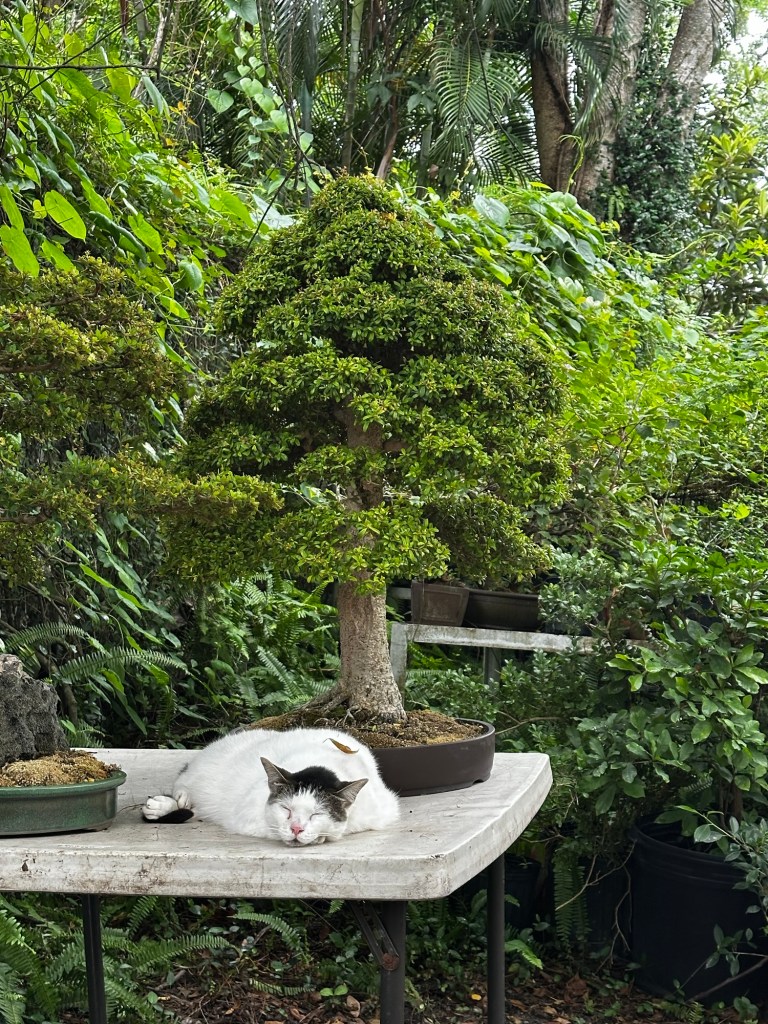
She kisses all the boys and makes them cry.
And the schefflera.
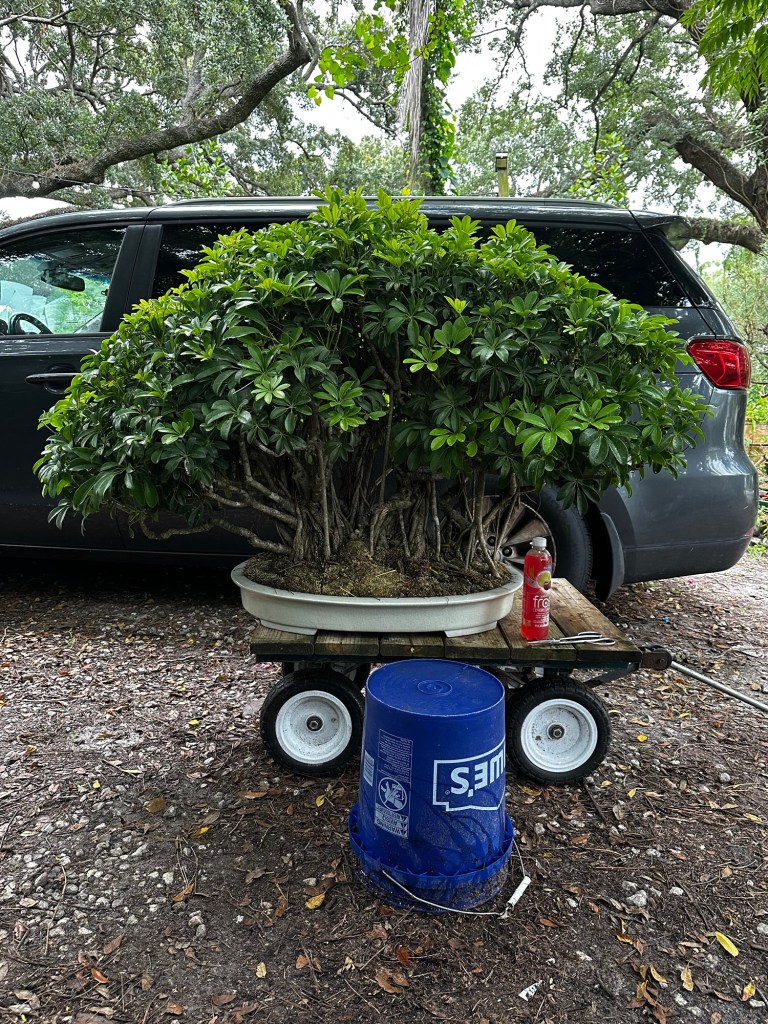
What’s the work today? A hard cut back and defoliation. Then a repot.
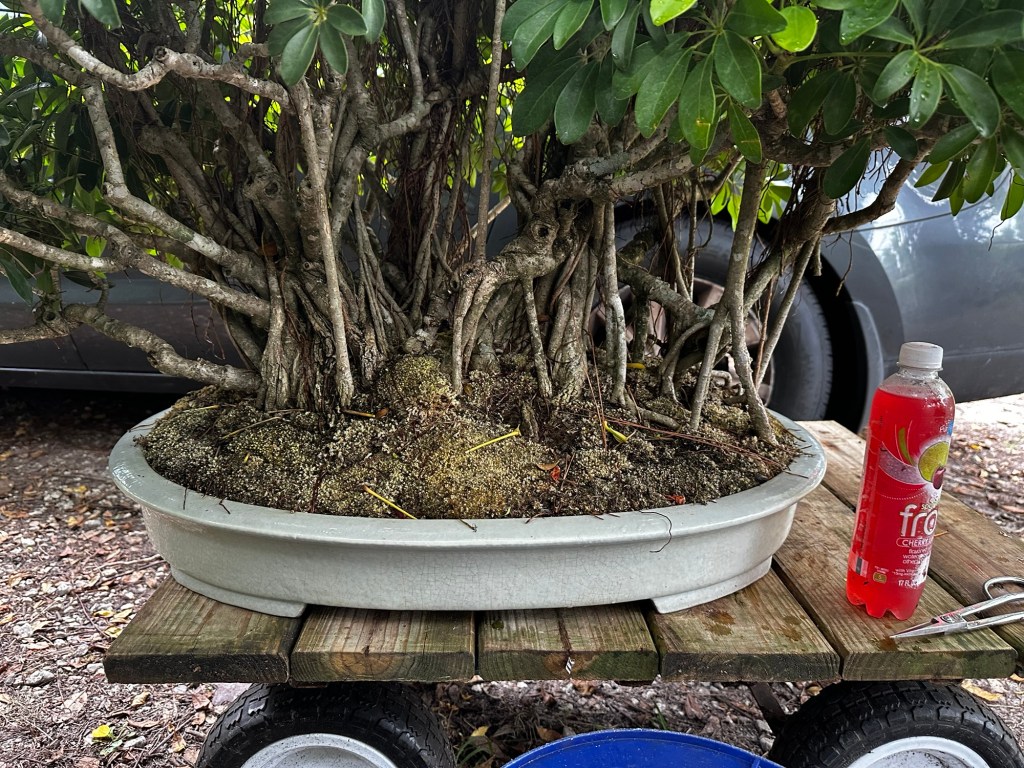
It’s been eating up all the Florida sunshine for the last few months, and it’s bursting and ready for some work.
It’s about to walk out of the pot.
The question is, I’m sure, why do you feel the need to defoliate?
Well, I think I might just tell you.
First, check out this post: I use some fancy words to justify my defoliation habit, go figure.
It explains more precisely what defoliation does. But basically, the tree does things, like grow, flower, drop leaves, etc., because of hormones. All because of hormones. Some people say “energy” is what causes growth. But no. Nope. Nada. Energy facilitates growth. But a tree will grow itself to death. It will use all its energy without anything left, and it will die.
Why? Because of hormones. So when we hear “them” say that by utilizing a specific pruning regimen of techniques, they are “balancing the energy, what they are really doing is utilizing the hormones to make the tree grow a certain way we find favorable.
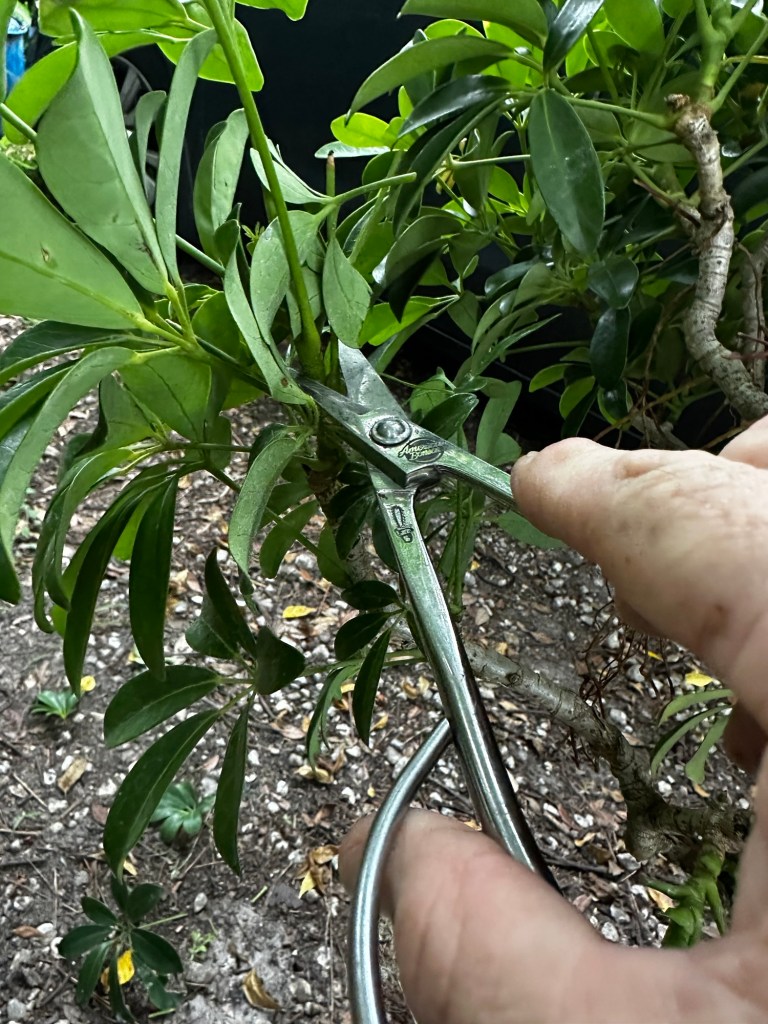
By defoliating, first, we are taking the trees ability to feed itself. Therefore, the hormones cause growth of new leaves, and, by proxy, more branches.
But, if we cut the terminal buds (like the blue circled branch below) and remove the hormone that causes branch elongation, we will free the hormone that causes backbudding to cause, well, more backbudding (auxin and cytokinin, respectively). Go back and read that post I linked earlier.
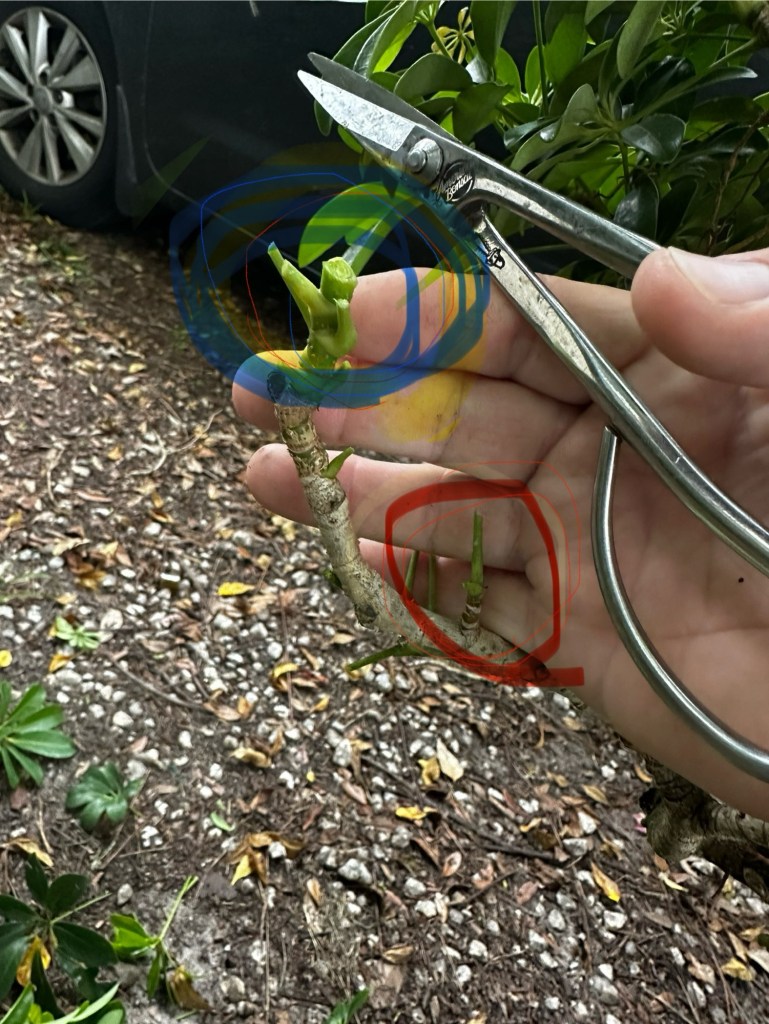
If we defoliate, and leave the terminal bud (like the red circled branch above) the branch will get longer.
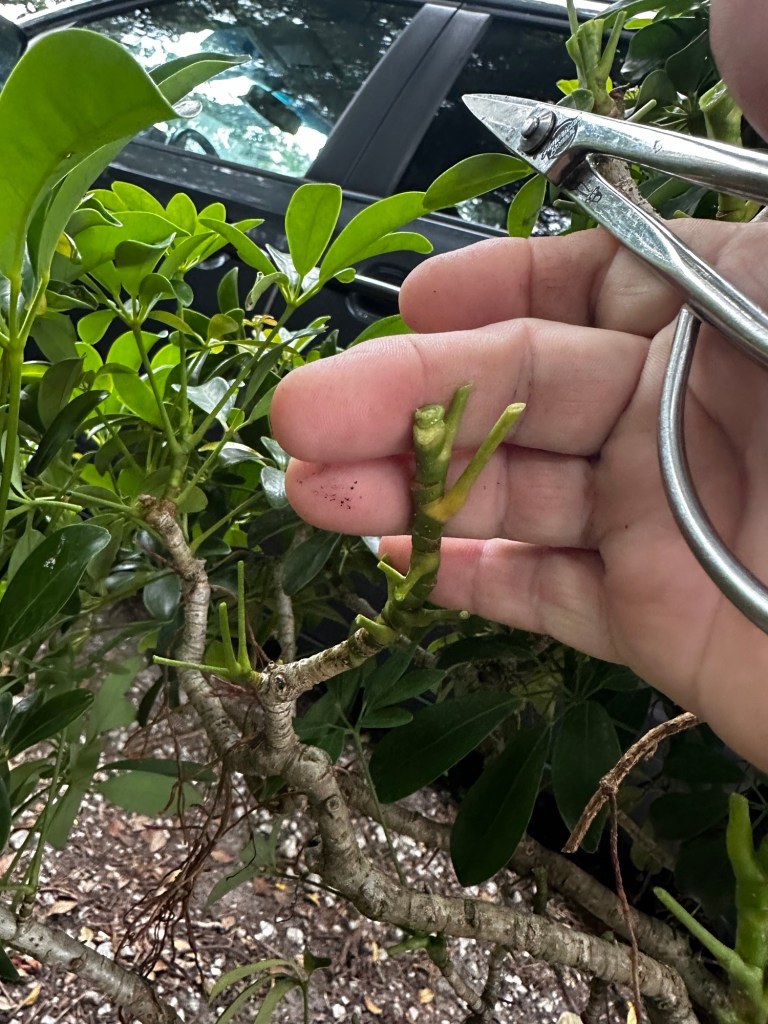
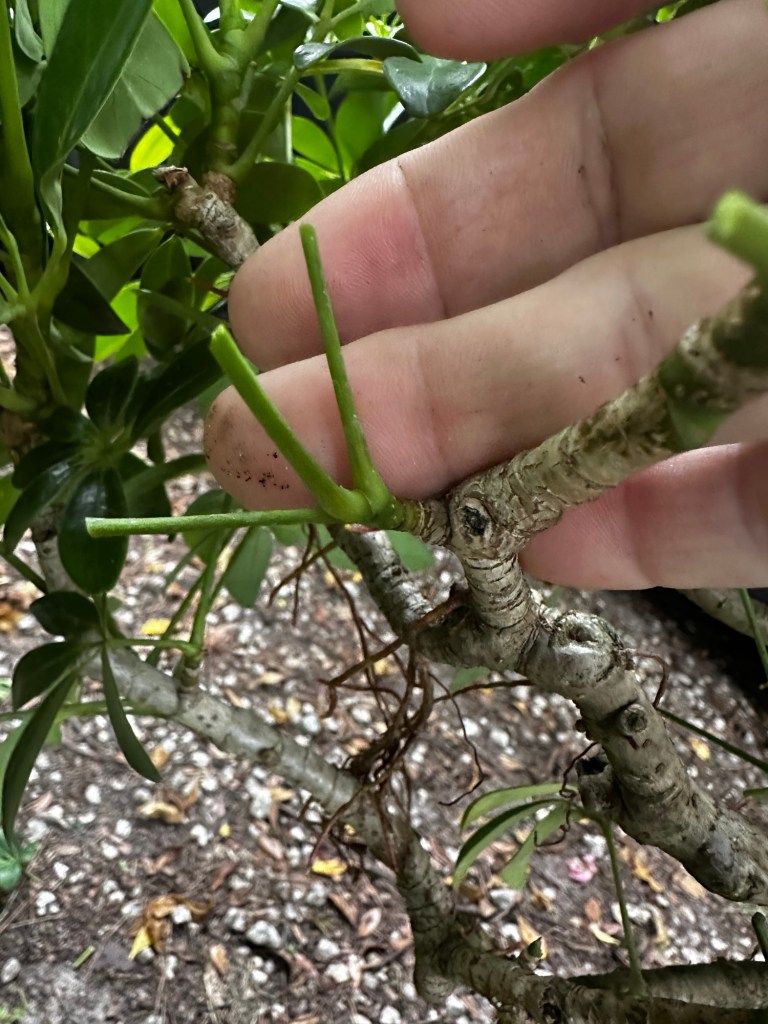
Now to prune the aerial roots. I know, I know, we like aerial roots.
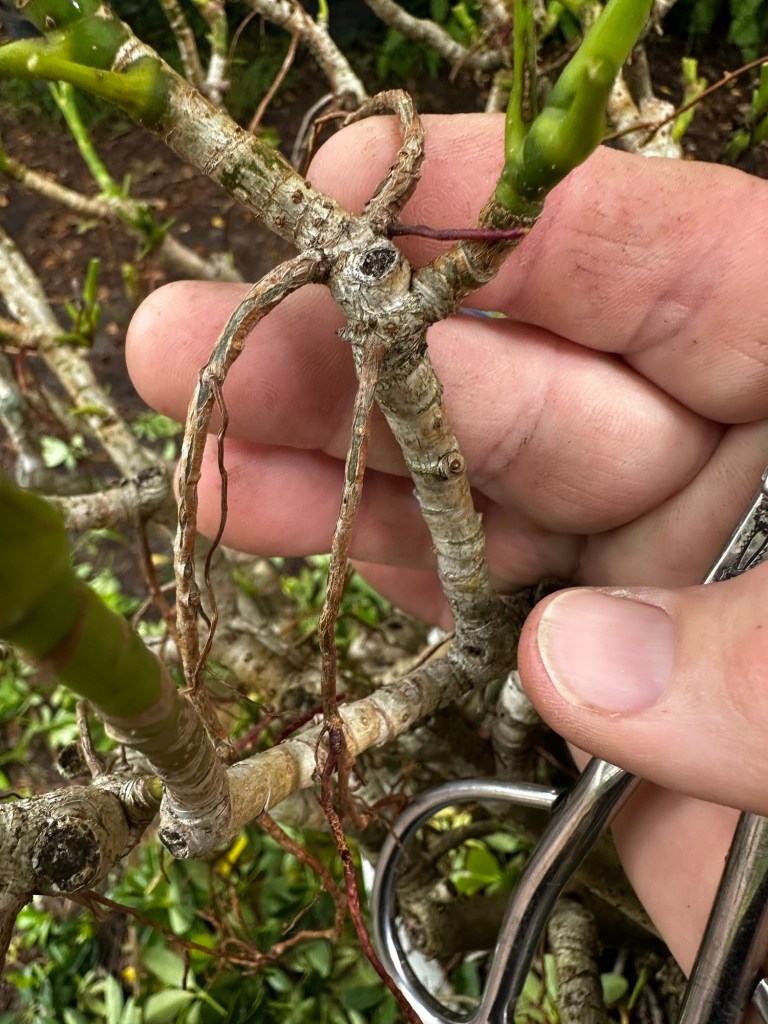
But we also like to have a believable tree. And aerial roots this high….

…don’t make for believable banyan trees. An artist isn’t a camera, we don’t have to copy nature as it grows, we show you what should be, or could be, or, simply, what we see.
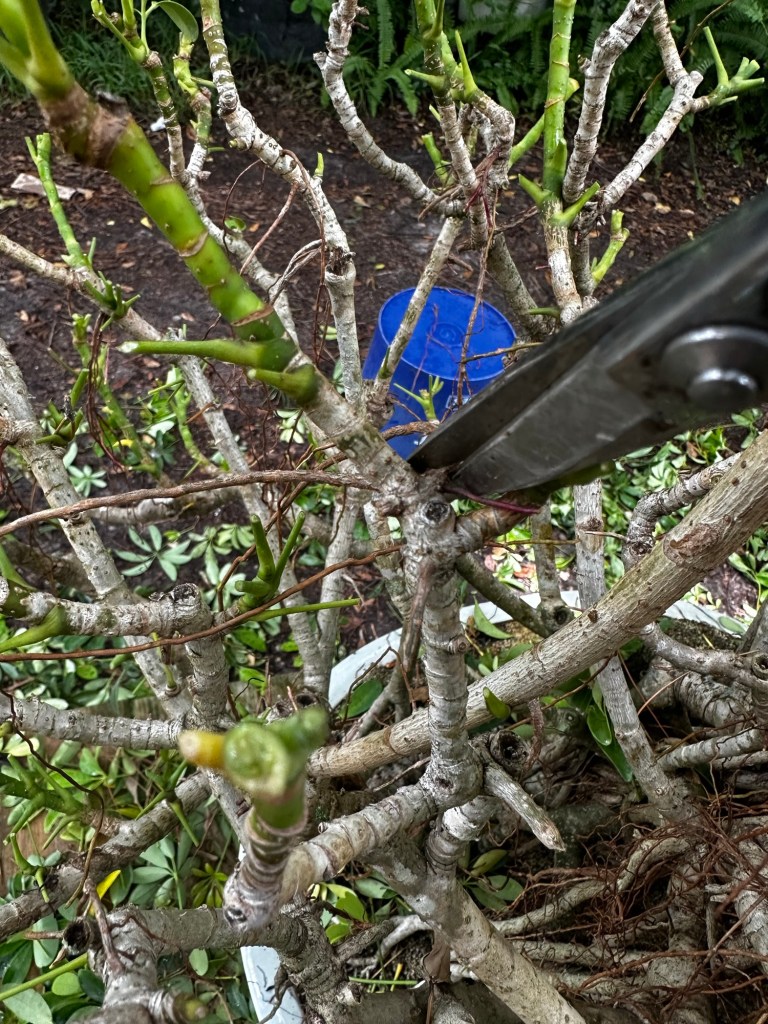
Snip snip snip!
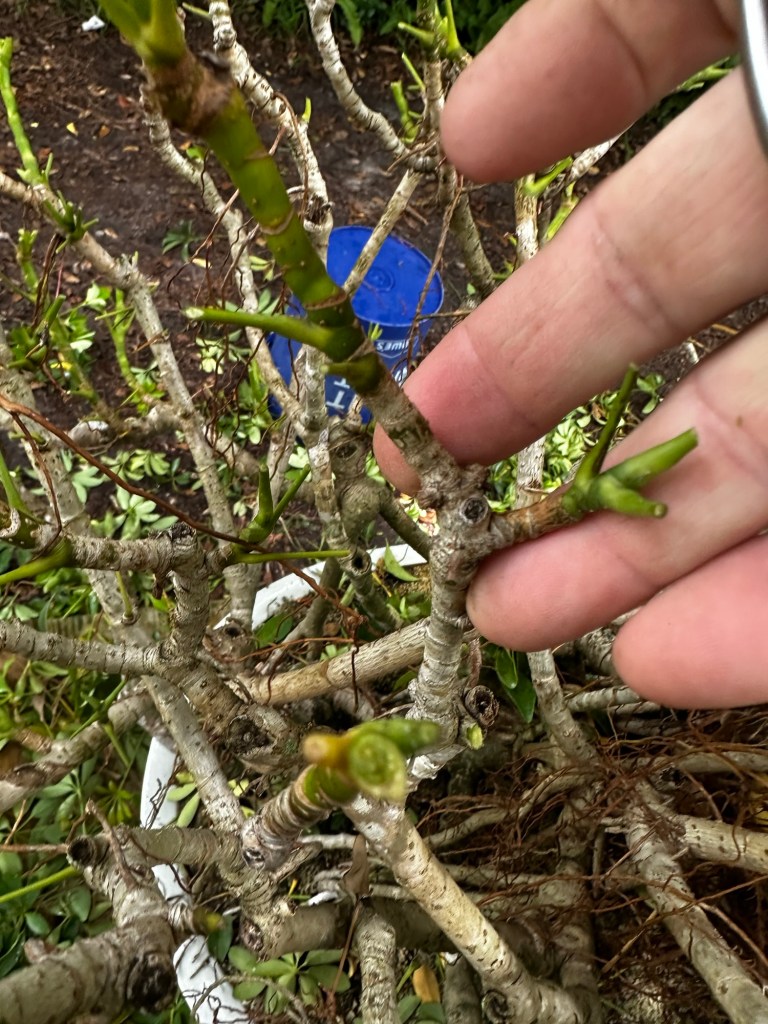
Getting close.
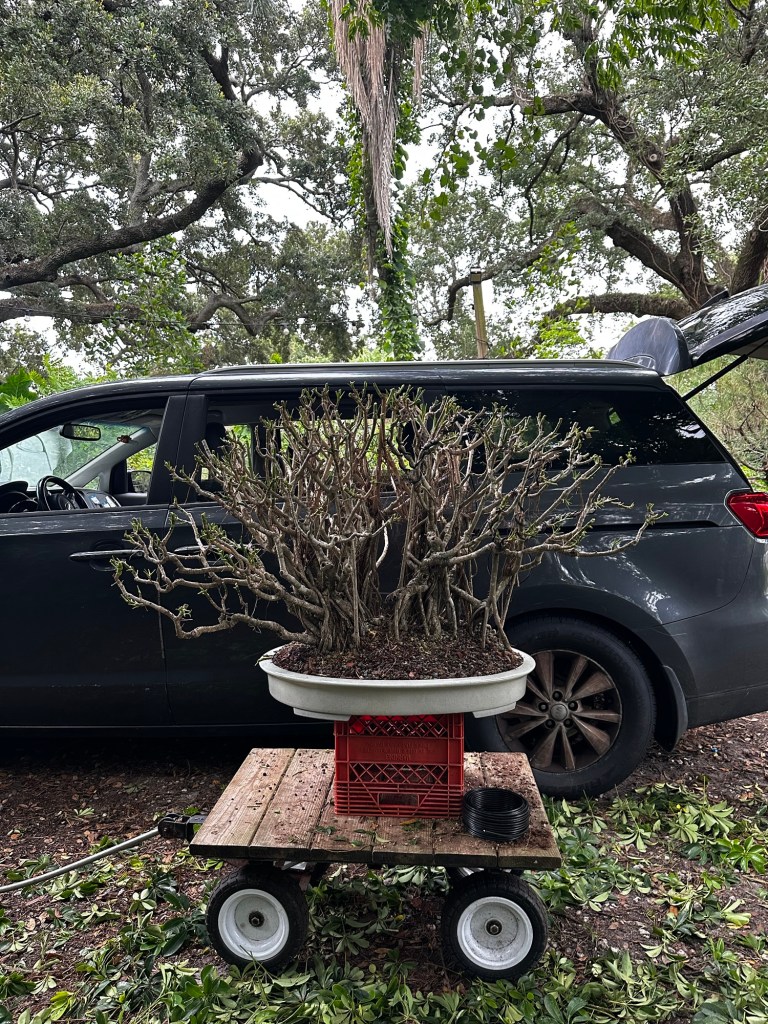
Take a look, from all sides.
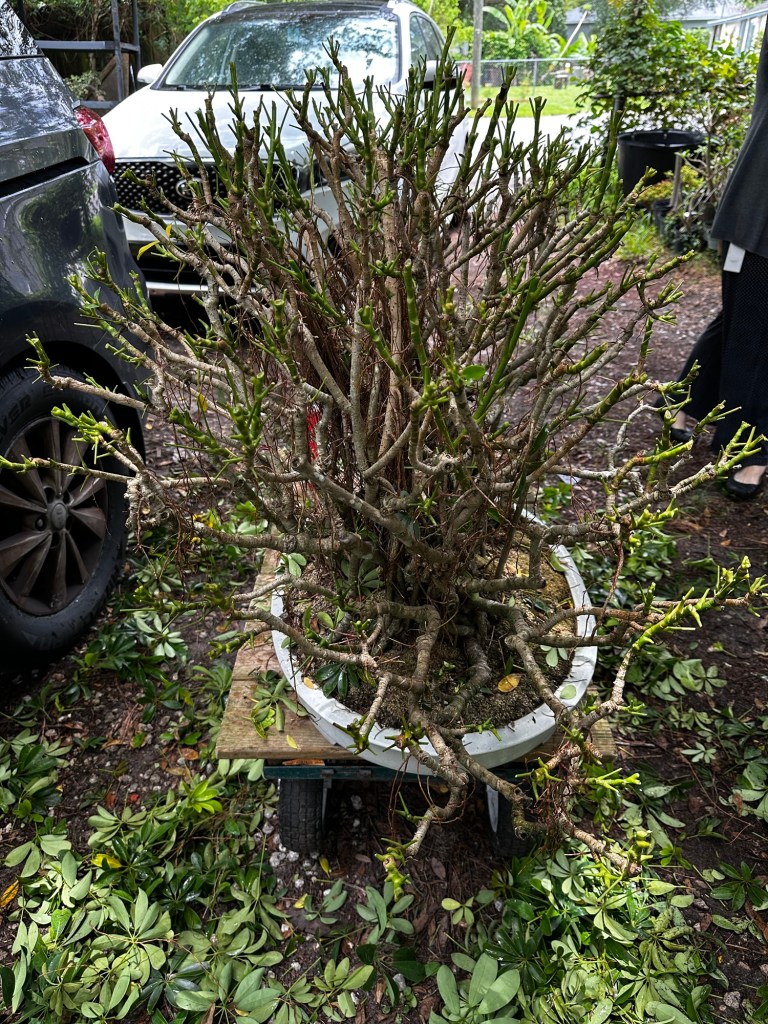
That’s a lot of leaves. Looks like an explosion.
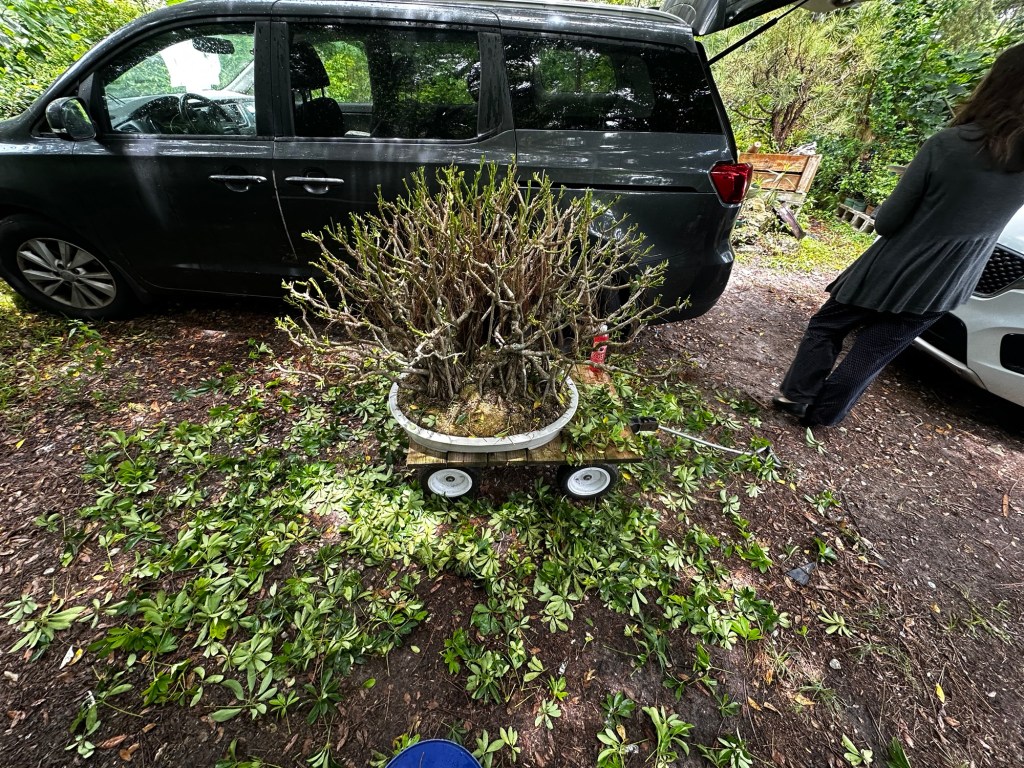
Needs some wire….

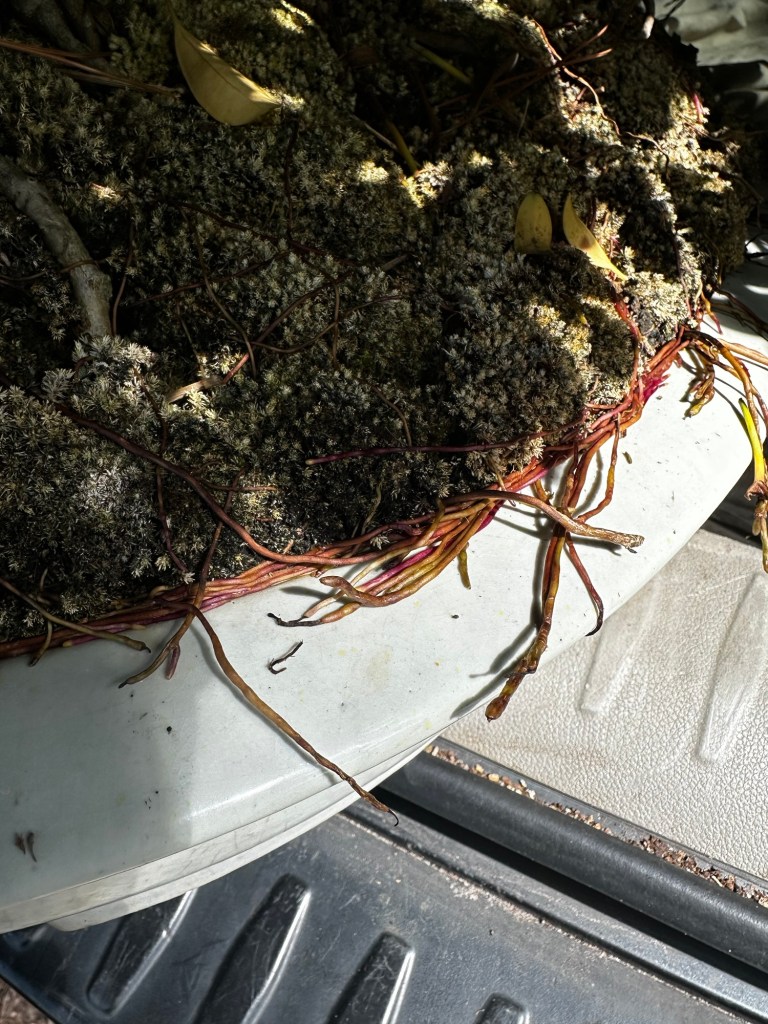
And a “quick” repot. Remove the old moss, save for later, it’ll green up again.
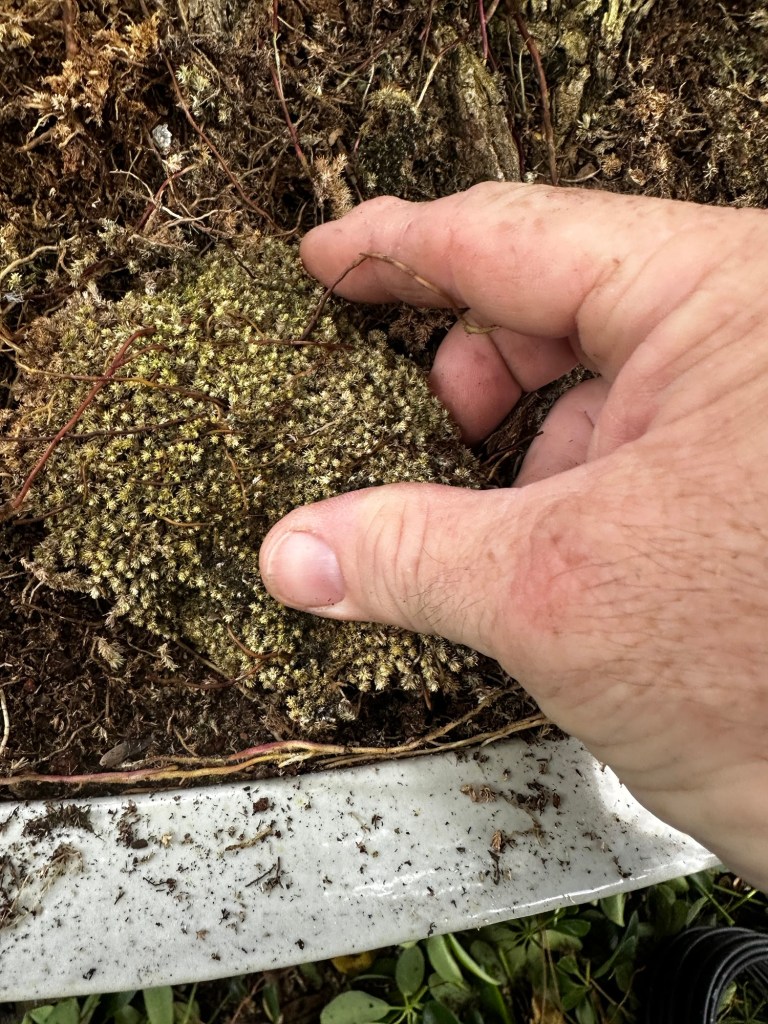
Maybe the repot won’t be so quick. Those roots are rooty.
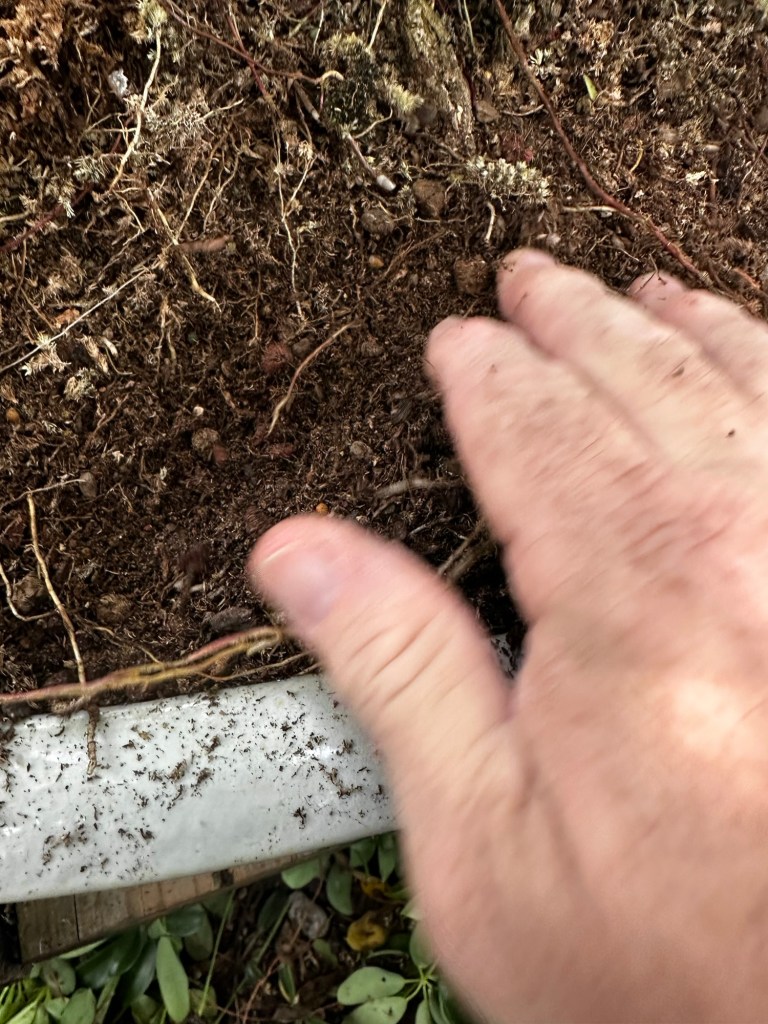
Old bark on on a big sheff. Looks old, like my face in the morning after a night out.
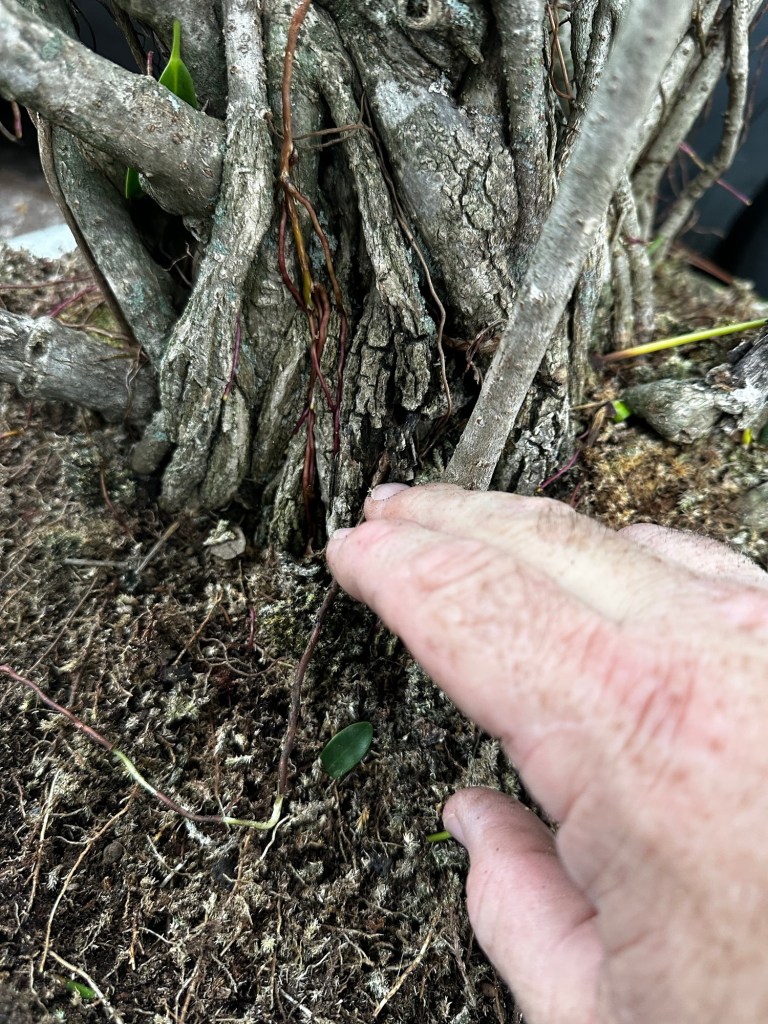
Or just any morning. I’m getting old.
Yeah, this will be a chore removing the tree.

DOH! Actually not bad. It just popped out.
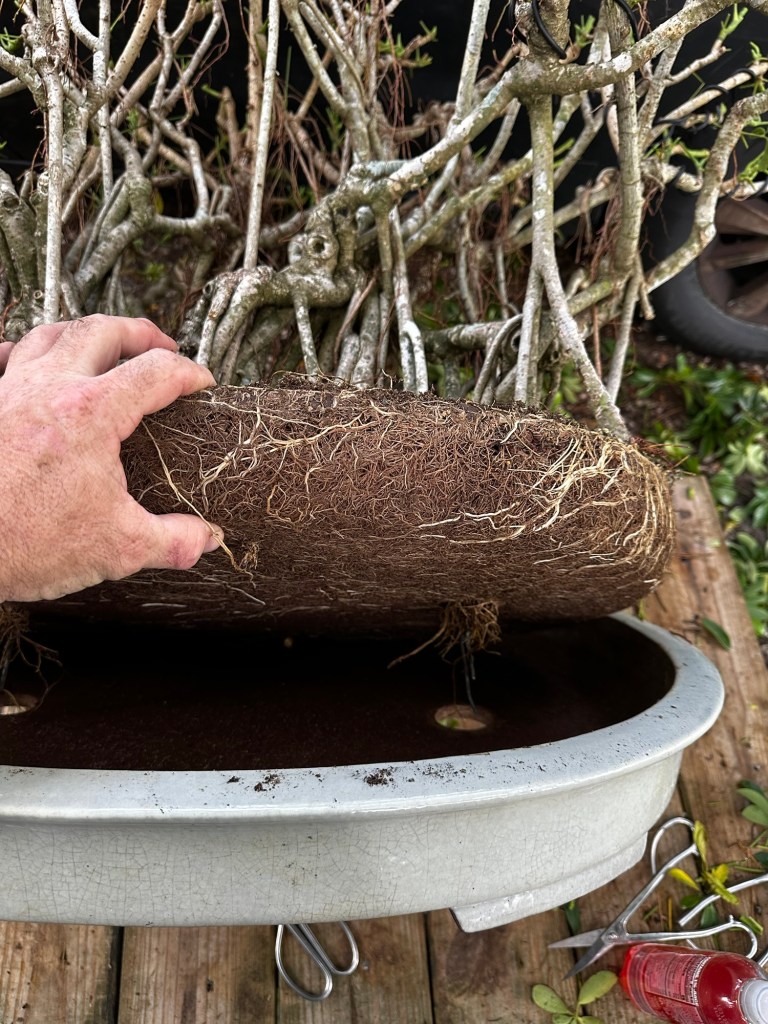
The damn thing is heavy and I’m alone in my driveway, that ain’t gonna work.
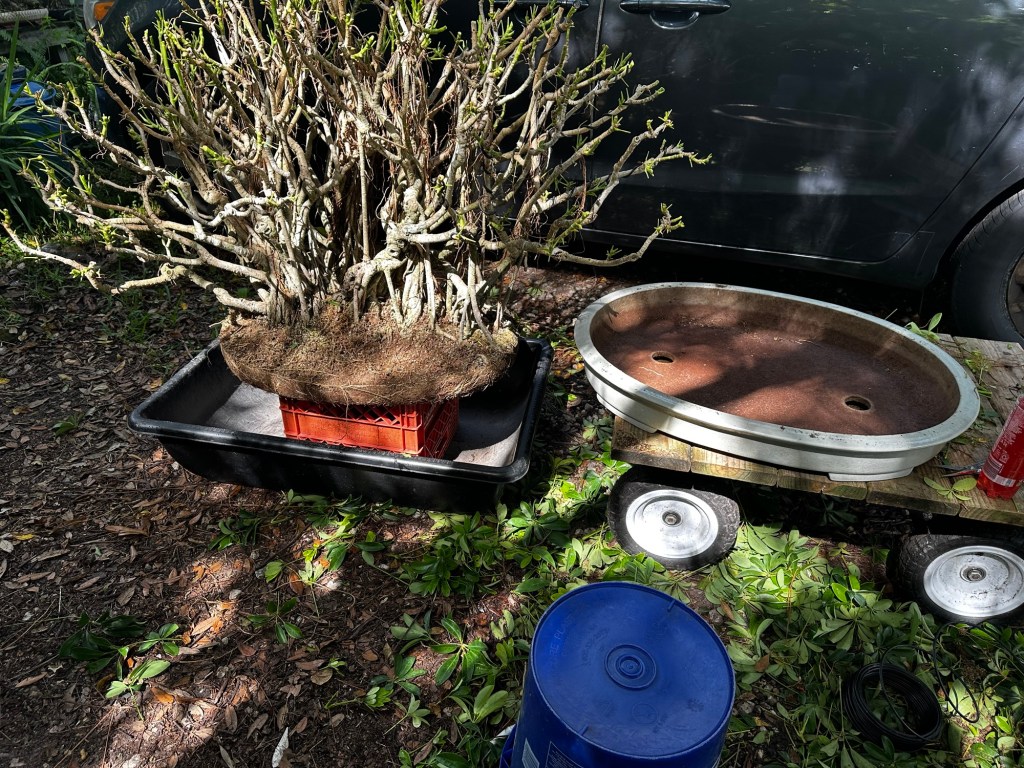
That’s a better setup. Now for the hook
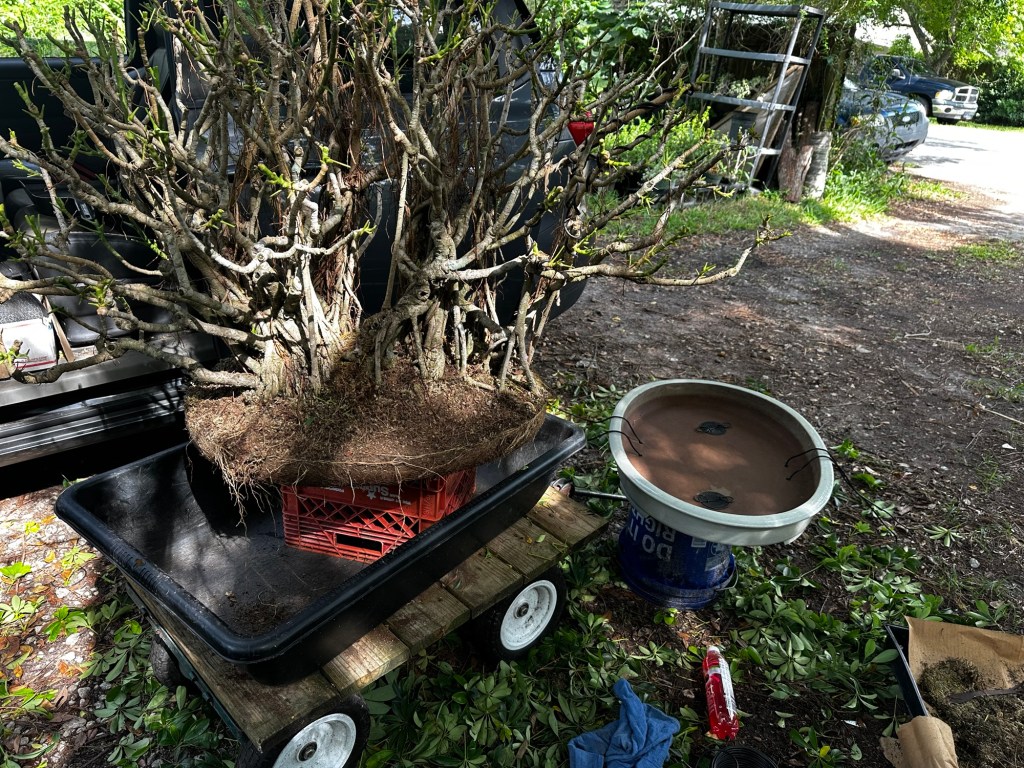
THE HOOK! A new product made by my friends at American Bonsai Tools, based in part on my handmade hook.

Makes for short work.
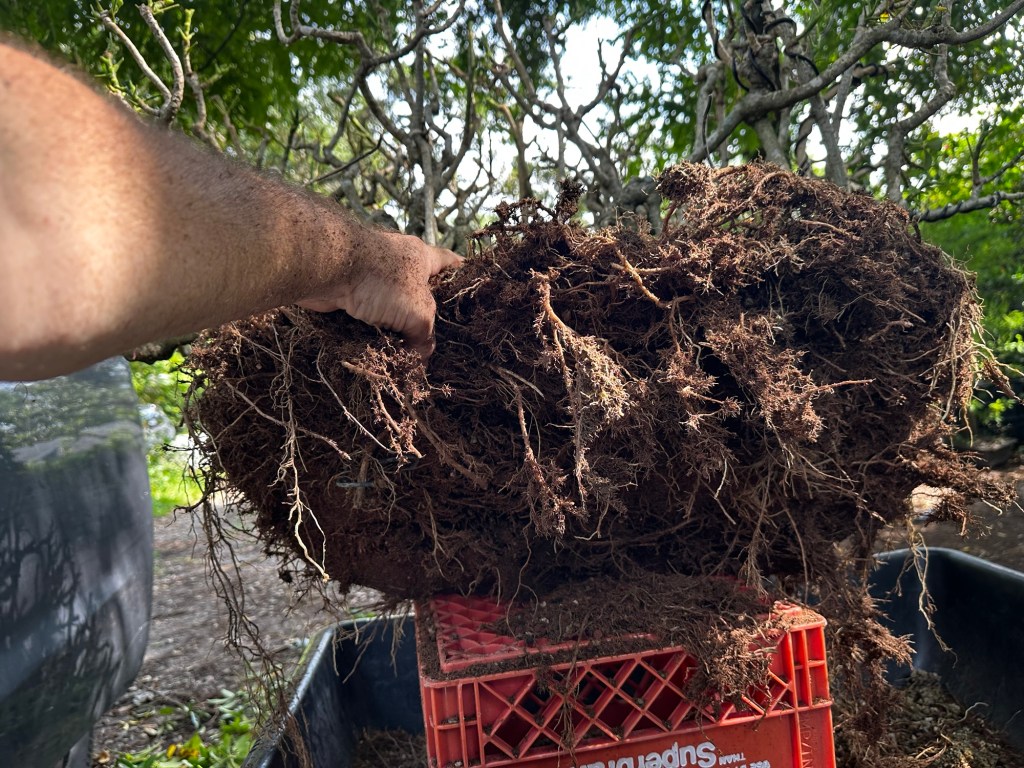
I’ll tell you what, the fragrance from a schefflera will clean out the nasal passages
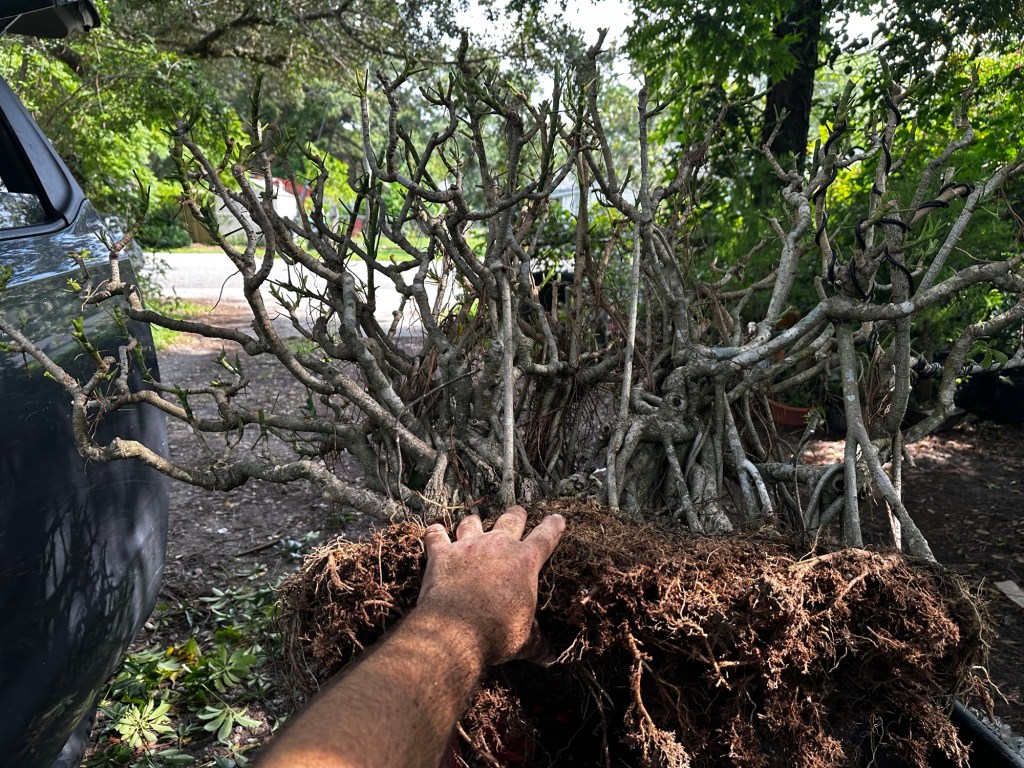
In the pot, some tweaks on the branches, and….
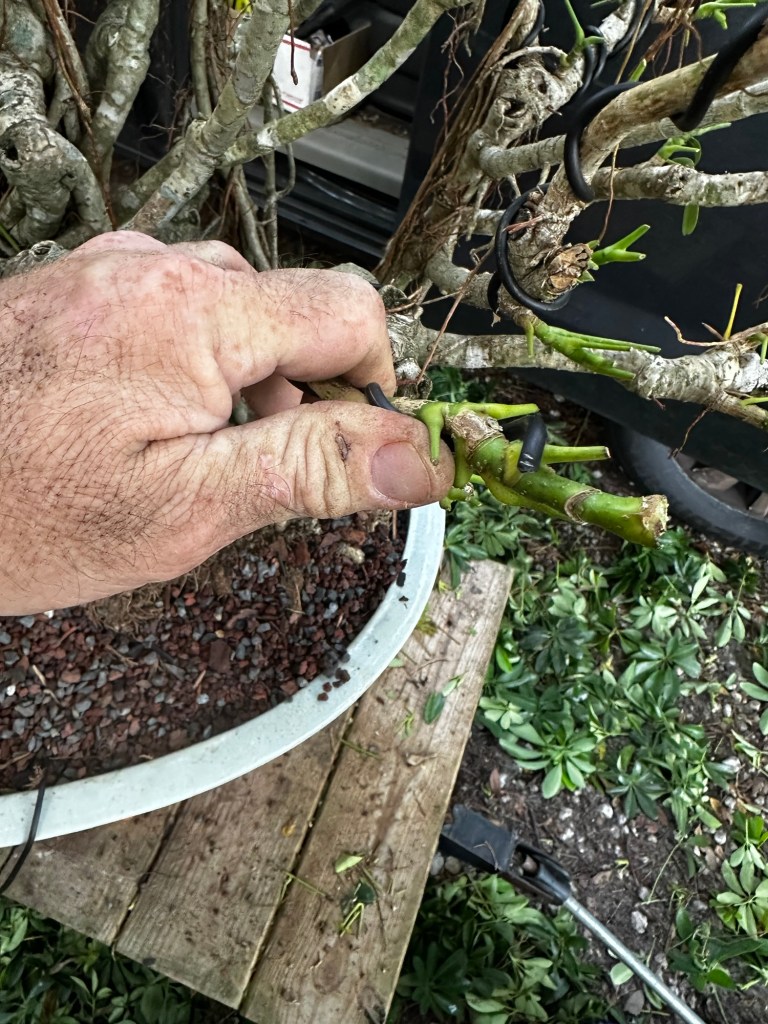
Below, the sheff as it was submitted to Epcot.

The day before install.

When I picked it up this morning.
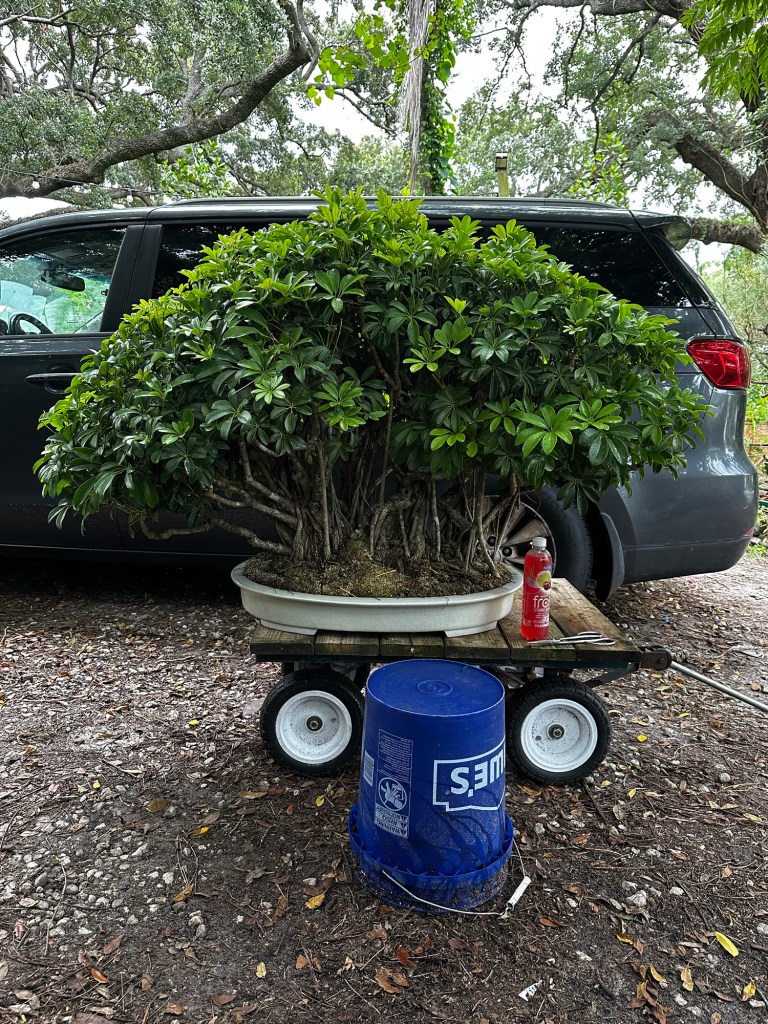
After I repotted, cut back, and wired.
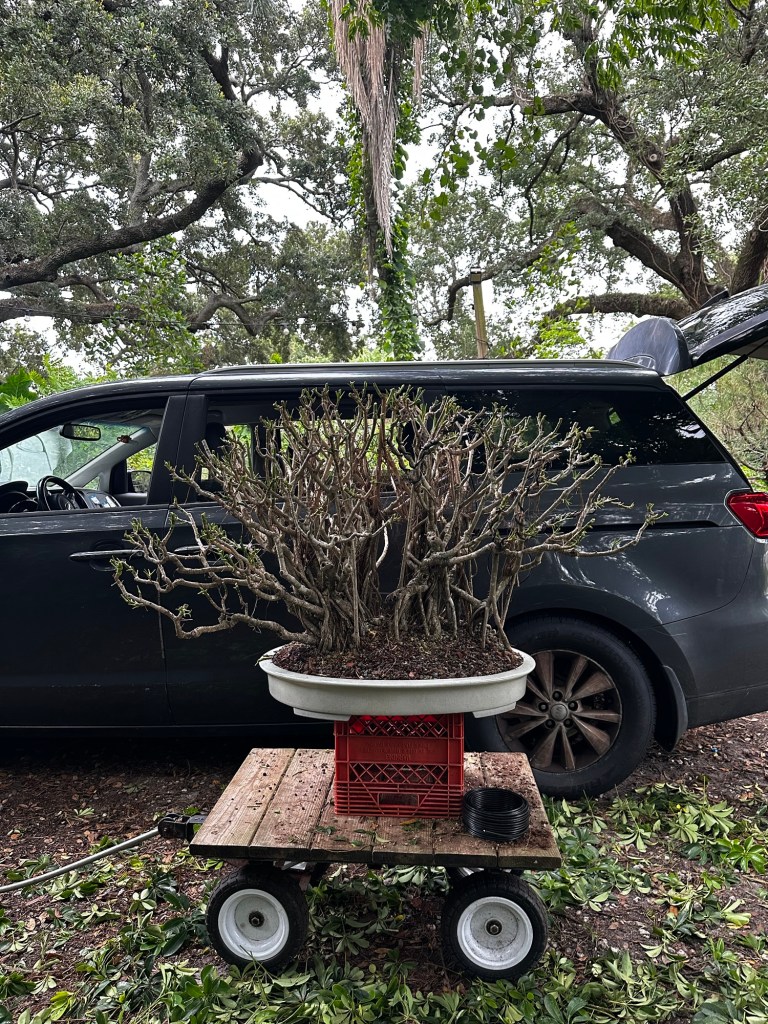
And Bob’s yer uncle! And my next door neighbor.
 Adam's Art and Bonsai Blog