This work was from February or March of this year, 2024. It took me that long to figure out where the comma goes in the title. And which words to capitalize. Not really but an excuse is an excuse.
So, with that said, here you go, a little late is all…
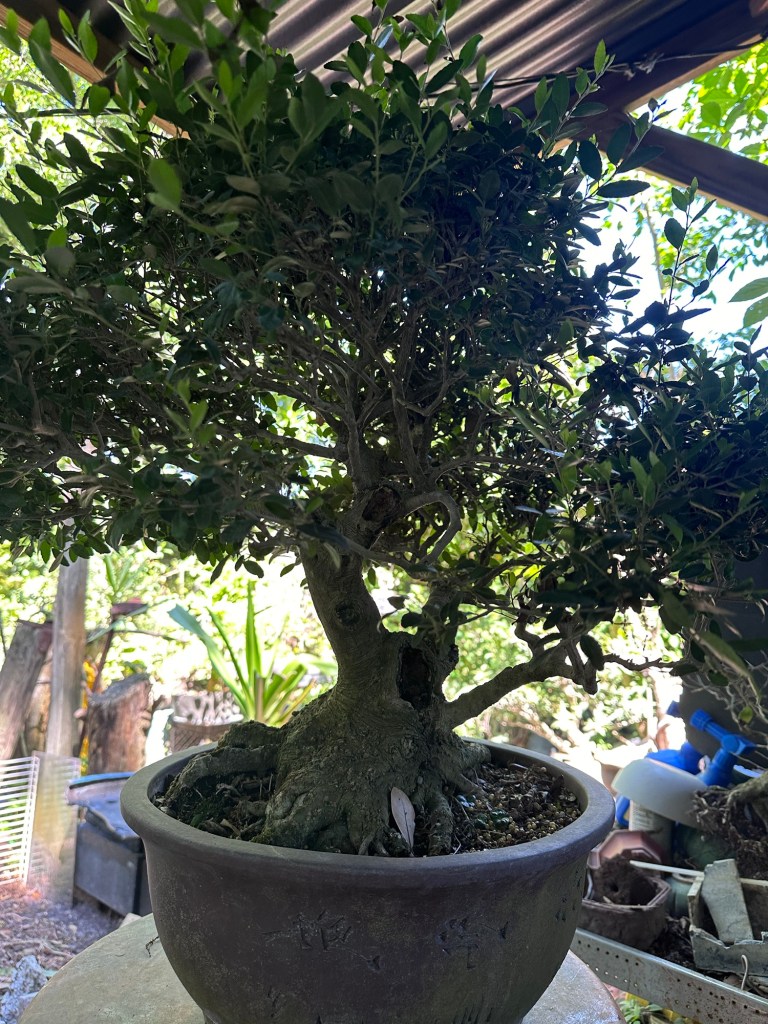
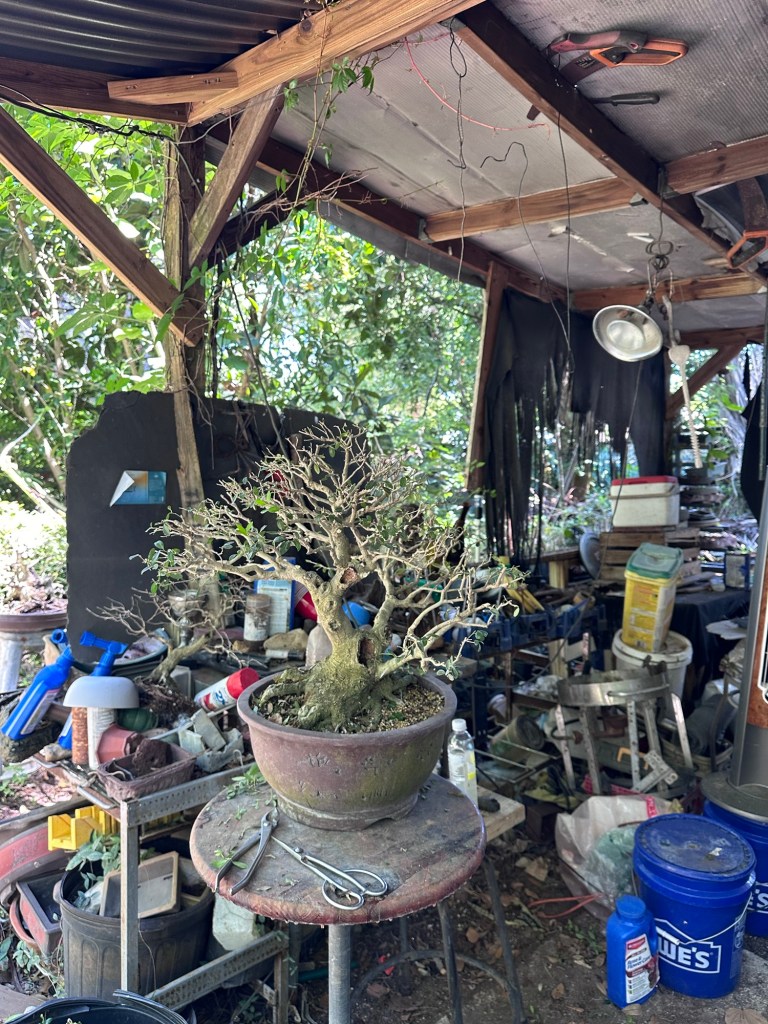
An Ilex vomitoria “schillings”. From my student, Sharon. She grows them in her landscape and has some impressive bonsai specimens as well.
But this one came from a Bonsai Societies of Florida convention workshop from several years ago. I’m not sure why she took the class, but she did, and I get to work on it. The yaupon holly is one of my favorite species and this one is fat and chunky.
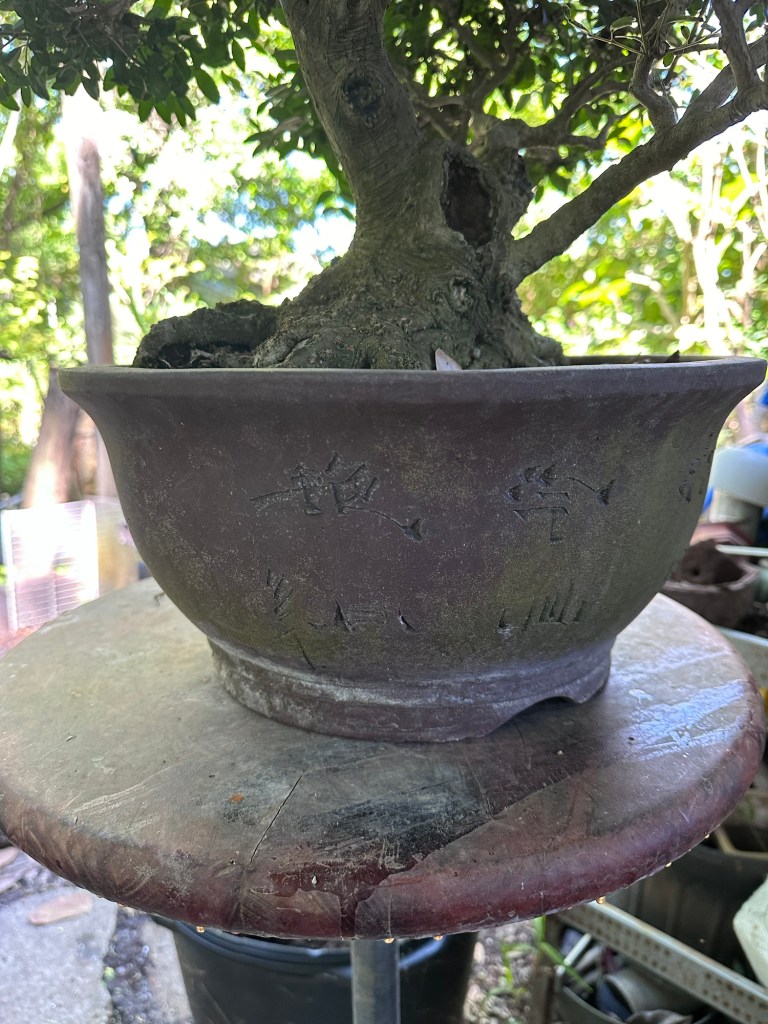
I believe the trees for the workshop were collected somewhere in Brevard county. By the Bonsai SOB’s.
I know, bad joke. But clever. The Bonsai Society Of Brevard: Bonsai SOB’s.
One of the clubs that’s seat to my heart and I consider it a home away from home (I belong to the Central Florida Bonsai Club in Orlando).
For clarification purposes, Sharon lives in the Tampa/St. Pete area of Florida. Opposite coast from Brevard.
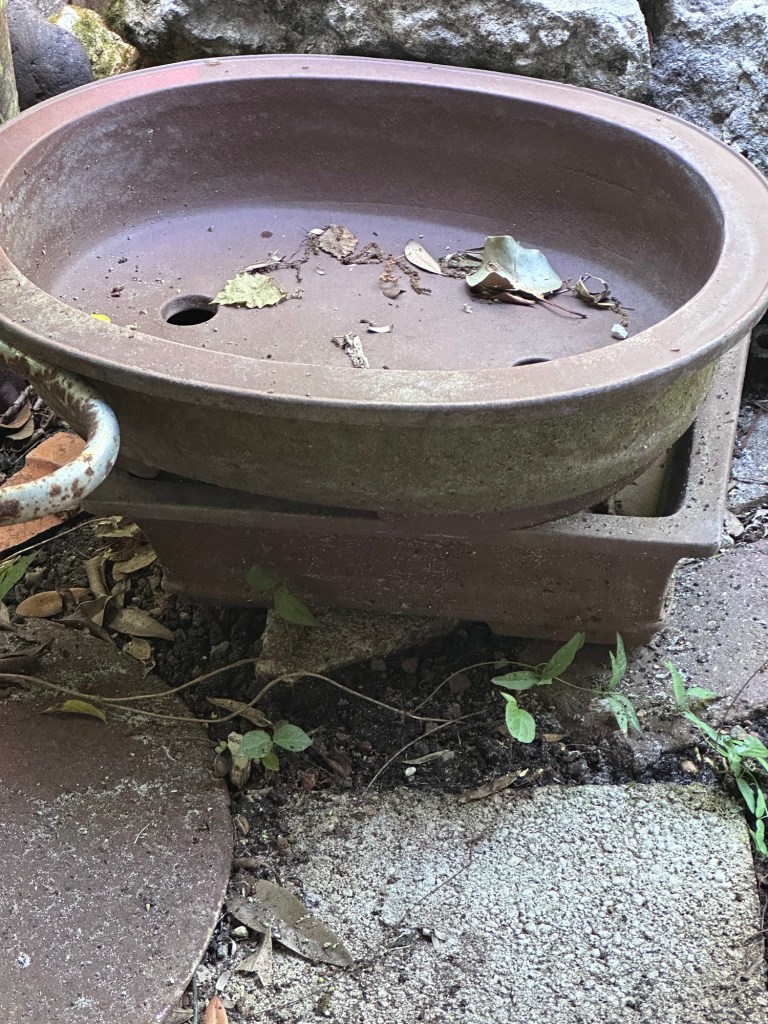
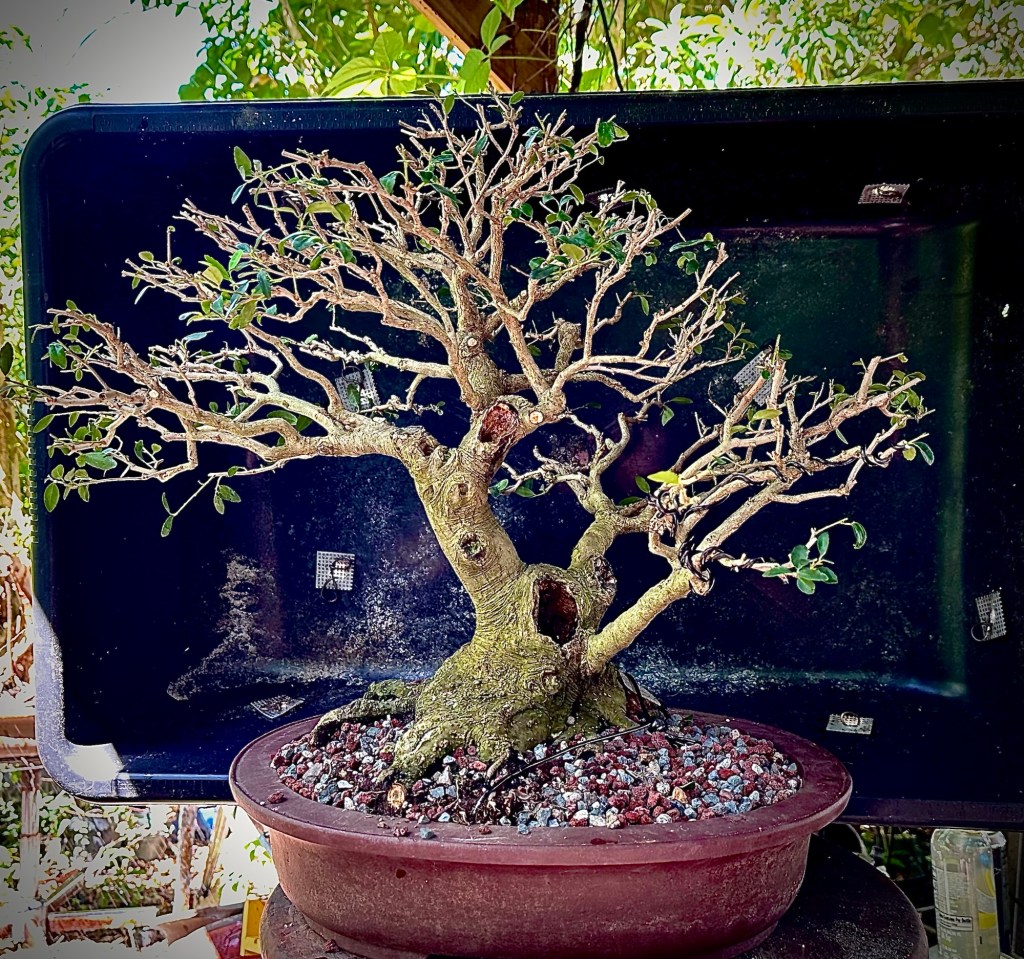
My Job, which I did late winter early spring (for y’all confused peoples out there) is to prune, style, and repot this old tree into this classic oval-shaped bonsai pot.
Damn what a sweet trunk. Like an ancient oak tree out of a story, maybe a Robin Hood and Maid Marion fairytale, enjoying a late spring, early evening stroll amongst the fireflies and sweet blooms of Nottingham Forest.

And that hollow, or, as they call it in some Japanese bonsai nurseries, an “uro”. Roll the “r” in the Japanese way.

Let’s get into it. Those concave cutters are ready, looks like.

Snip!

There are a lot of branches, which is good, more to choose from. The craft of bonsai is knowing the most amount of branches to remove from your tree and still survive. The art of bonsai is knowing what to keep so your tree still looks like a tree.

Craft, knowing the whens and hows to cut. Art, knowing the whys and becauses.

Early spring (in Florida that’s mid-February) the tree begins to push new growth. Below, that new growth has begun to harden off.
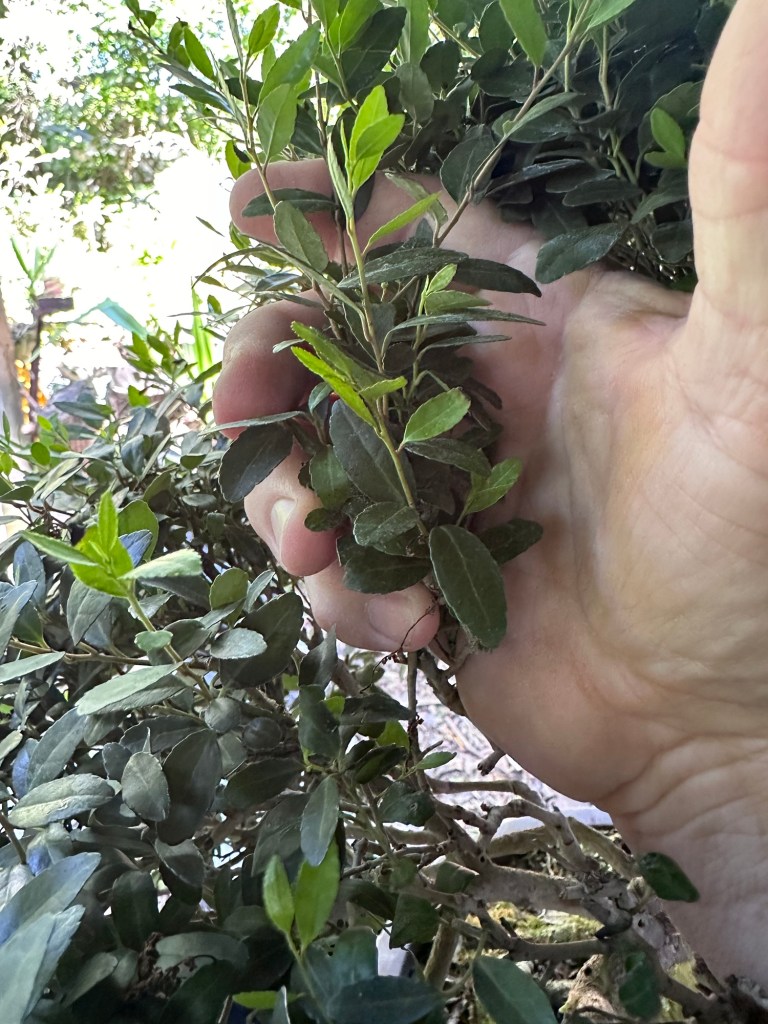
Now’s a good time to get some cutting in.

This’ll be quick, so pay attention.

Sharon has been selectively pruning for movement, as you see below.

And if I had the druthers, I’d make some warriors roasted yaupon tea with all the leaves on the ground.

There we go. Lookin’ good.
A mind puzzle for ya’ll:
I have a farm.
There’s a drought, but I have a deep well.
It’s drying up, but there’s still water left to live off of to water the crops and for the animals and my family.
Maybe enough until the rainy season.
Maybe.
My house, where I live, catches fire.
Do I let the house burn down or do I use up my water to put out the fire.
For the smarty pants, those two options are your only choices.
What should I do?

Now that’s a root ball!

The tree is old in this pot and well established. Ilex like good drainage and this depth pot is well suited for it. But aesthetically, the art part, it’s not.

That’s a question, why do we use shallow pots when, horticulturally, a deeper pot is better.
Not many know. I’ll ask this question during demos and I’d get answers like: it helps to dwarf the tree, or, it slows the growth. The only reason is it makes the trunk look bigger.
Bigger trunks look older. And that’s what the Art of Bonsai is: making a little, young tree, look like a big and old tree.
In fact, most of all the craft of bonsai, and the soil components and composition, are there to serve the art.
Take the roots. We know that the roots are responsible for most of the water absorption and nutrient uptake. They’re also the main storage facilities for excess sugars for those lean times a tree has to endure. The only reason we use expensive aggregate as soil is to increase drainage when we put our trees into shallow containers. Bonsai soil is not magical, and it’s not really suited for deep containers, as it dries out too fast (there’s a lot to say about that, but those posts have already been written. Start at this post: Akadama, the Ideal Bonsai Soil and follow the related posts at the bottom), but it works for bonsai containers.

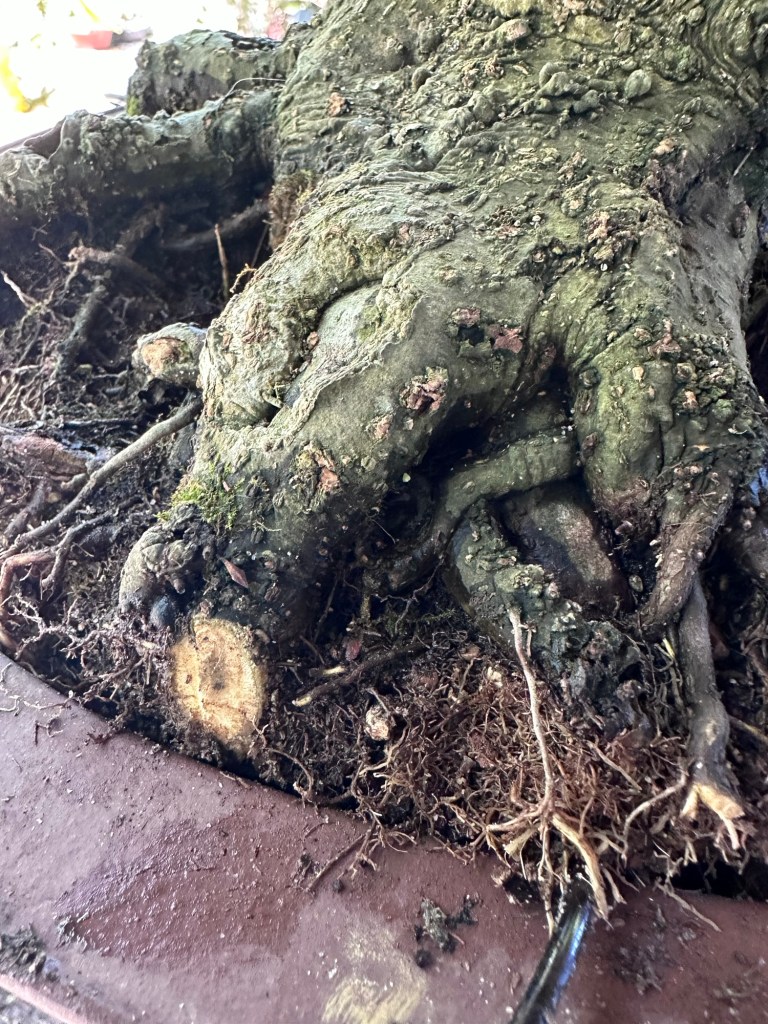
For this tree, and its roots, it’s been prepped for a more shallow container, but there are still a few roots to get rid of.

I’m not worried too much about chopping those big roots (they hold the sugar remember) because the species grows fast and makes tons of sugars. So just leaving the feeder roots (the small ones) is good enough for the health of the tree. Knowing that (to continue the theme) is the craft. You have to learn the craft just as much as the art part.

The tree is healthy enough to handle this rough treatment.

And I know how to sharpen my scissors, so I don’t want to hear anything about using my good scissors on the roots. But you shouldn’t. Do as I say, not as I do.
Here’s a crossing root. Kinda straight too.

Cut it off and that’s what’s below it. It’ll puff back out, but it was beginning to girdle the lower root.

And I might just need a shoe horn. Maybe I should advise American Bonsai tools to make one…….
And it fits! Bob’s yer uncle!

I’m still on the fence with that first branch on the right. I can’t bend it, so Sharon either lives with it, or we cut it off.
You read earlier that this tree lives in St. Petersburg FL. If you’ve been reading the news, you should know about the two hurricanes that have impacted the Gulf Coast of Florida. Sharon stayed for Helene, but she evacuated for Milton. I don’t have the heart to ask her how her trees have fared (her house and family are well).
This year has been trying, especially for those in the path of Helene; Florida, Georgia, Tennessee and especially North Carolina. I had very little damage, just a little debris. All I did was sweat a little cleaning it up. But there are people who’ve lost everything. The towns they live in are even gone.
All the loss of life is devastating. I have no words for it.
If you have a way to help, please do.
 Adam's Art and Bonsai Blog
amen.
LikeLike
Hey Adam, hoping you can bring back my rain trees to Kathrin’s on Friday. I think you have two, pics attached. Really like getting your blogs! Take care, Bill
>
LikeLike
Hey Adam, what’s up with this ficus tree? Notice the blackand areas along the vein lines. Appreciate your thoughts! . Thanks, Bill
>
LikeLike